Eczema vs. Rosacea: Symptoms and Treatment Differences
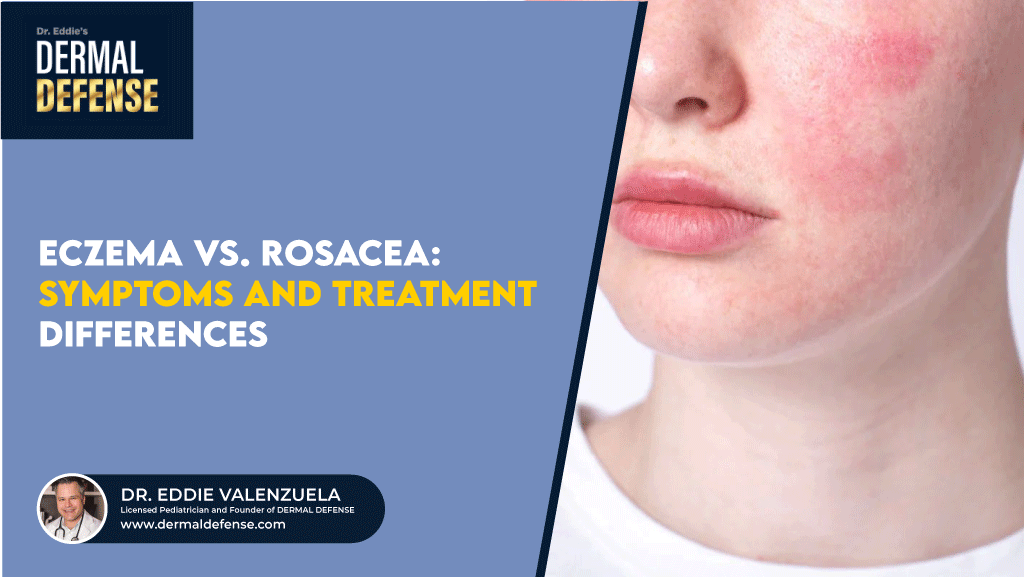
When you experience red, irritated, and inflamed skin on your face, it can be especially bothersome. That rash on your cheeks not only causes physical discomfort, but it can also affect your confidence.
So what’s causing the redness? Is it simply sensitive skin? Is it eczema—or could it be rosacea? Because eczema and rosacea can look very similar, it’s often difficult to tell them apart without understanding the key differences.
Recognizing the difference between eczema and rosacea is essential for managing symptoms and choosing the right treatment plan. This guide walks you through everything you need to know about eczema vs. rosacea, helping you identify which condition may be responsible for your facial redness and irritation.
What is Eczema?
Eczema is a chronic inflammatory skin condition that can cause red, dry, itchy skin. Even though there are many different types of eczema, atopic dermatitis is one of its most common kinds.
Which is why atopic dermatitis itself is often referred to as eczema. Even though eczema can appear anywhere on the body, it is more common on
- Eyelids
- Elbows
- Knees
- Hands
- Feet
Eczema can also appear on the face, and when it does, it is known as facial eczema. On the face, it usually affects the cheeks, skin around the eyes, and the mouth. These are the few common eczema symptoms that you may notice on your skin.
- Itchy skin
- Dry skin
- Inflammation
- Redness and rashes
- Flaky, rough patches
- Irritation
- Oozing skin
What Causes Eczema?
Most researchers believe that eczema is caused by a combination of factors, such as
- Genetics:
People who have a family history of eczema, asthma, hay fever, and allergies are more likely to experience eczema. Because of a gene mutation, one produces less filaggrin, a protein that helps strengthen the skin’s natural barrier.
- Impaired skin barrier:
Due to the lack of filaggrin, the skin’s natural barrier becomes weak, which is why it is unable to retain moisture properly and protect the skin against outside irritants and allergens.
- Environmental triggers:
When you have a skin barrier dysfunction, even the smallest things like the chemicals in skin care products, weather changes, and sun exposure can trigger an eczema flare-up and lead to itchy, red, irritated skin.
What is Rosacea?
Rosacea is also a chronic skin condition that leads to red, irritated skin that looks quite similar to that of eczema. However, both conditions are different and have their underlying causes.
Rosacea is more common on the face than any other part of the body. It usually affects the
- Cheeks
- Nose
- Forehead
- Chin
It causes small blood vessels to be visible under the skin, which is why it is more prominent on lighter skin tones as compared to darker skin tones. Some common symptoms that you may notice with this condition are:
- Persistent redness
- Blushing
- Visible veins
- Pus-filled bumps
- Occasional itching or stinging sensation
- Dry or peeling skin
What Causes Rosacea?
The exact cause of rosacea is still unknown; however, research suggests that it may be linked to internal inflammation, abnormalities in the skin’s immune response, and even genetic factors–similar to eczema. While the root cause isn’t fully understood, several well-known triggers can worsen rosacea or lead to sudden flare-ups.
Common Rosacea Triggers
- Sun exposure
- Spicy foods
- Stress or emotional changes
- Hormonal fluctuations
- Hot beverages
- Alcohol
- Extreme temperatures or wind
Because rosacea is highly sensitive to environmental and lifestyle factors, identifying and avoiding your personal triggers can make a significant difference in managing symptoms.
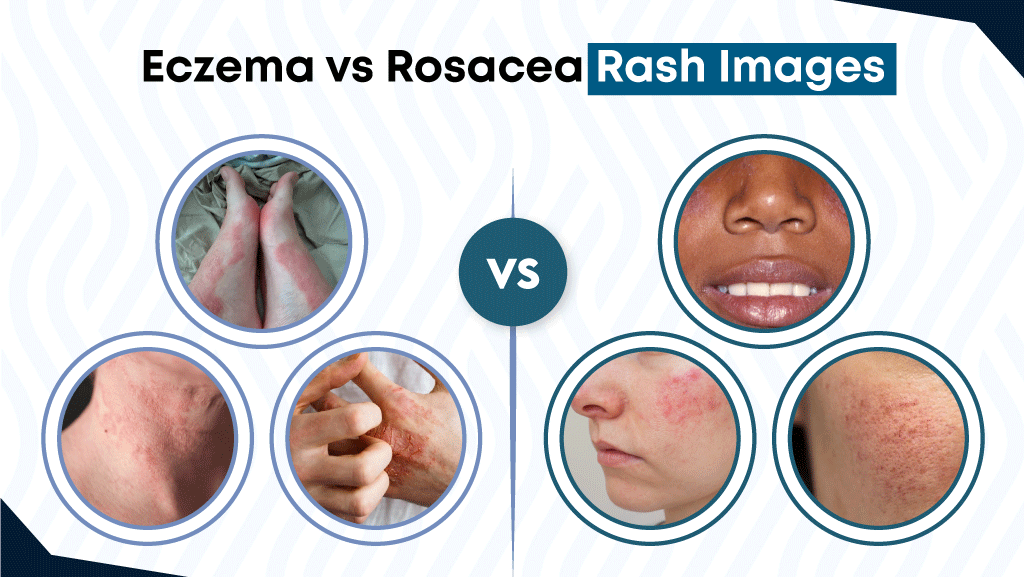
Because both conditions can cause facial redness, dryness, and irritation, many people mistake eczema for rosacea. Reviewing these eczema vs. rosacea facial rash pictures may help you recognize the difference.
What’s the Difference Between Rosacea and Eczema?
Here are the key differences that can help you identify is it face eczema or rosacea.
| Eczema | Rosacea | |
| Causes | Genetics, impaired skin barrier, and environmental triggers | Immune system response and inflammation |
| Age of onset | More common in children below the age of 5 | More common in adults above the age of 30 |
| Facial areas affected | Cheeks, eyes, and mouth | Cheeks, nose, forehead, and chin |
| Other areas affected | Hands, elbows, knees, and feet | Mostly appears on the face |
| Flushing | No | Yes |
| Visible blood vessels | No | Yes |
| Itching | Intense and persistent | Mild, usually in the form of a stinging sensation |
| Treatment | Eczema skincare routine, avoiding the triggers, topical corticosteroids, and antihistamines | Anti-inflammatory creams, oral antibiotics, laser therapy, and avoiding triggers |
Treatment
Eczema Treatment
There is no permanent cure for eczema; however, there are a few things that you can do to soothe an eczema flare-up or prevent future ones.
- Use an eczema body wash to cleanse your skin daily.
- Moisturize your skin at least twice daily with a hypoallergenic eczema moisturizing cream.
- Don’t forget to moisturize your skin within 3 minutes after taking a bath, as the skin can retain more moisture at that time.
- Always use lukewarm or cool water instead of hot water to wash your skin.
- Be consistent in following the eczema skincare routine to prevent future flare-ups.
- Avoid the triggers that may be making your condition worse.
- For severe itching, the doctor may prescribe wet wrap therapy or the use of antihistamines.
Rosacea Treatment
Just like eczema, there is no permanent cure for rosacea; however, proper skin care and trigger management can significantly reduce flare-ups and improve symptoms. Here are a few steps that can help soothe rosacea-prone skin:
1. Cleanse Gently Each Day
Use a mild, fragrance-free cleanser to keep the skin clean without causing irritation or stripping moisture.
2. Moisturize Twice Daily
Apply a rosacea-friendly moisturizing cream at least twice a day to strengthen the skin barrier, reduce dryness, and calm visible redness.
3. Follow Medical Treatments When Needed
For more severe or persistent rosacea, a dermatologist may prescribe:
- Oral antibiotics
- Anti-inflammatory creams
- Topical medications (such as metronidazole, azelaic acid, or ivermectin)
- Laser or light-based therapy for persistent redness and visible blood vessels
4. Use Prescribed Medications Correctly
Always follow your doctor’s instructions when using oral or topical treatments. Overuse or incorrect use can irritate the skin and lead to complications.
Similar Conditions
Eczema and rosacea are not the only skin conditions that look similar. Many other skin conditions can manifest similar symptoms, especially redness, irritation, and itching. However, if you are unsure which condition you are experiencing, it is best to consult a dermatologist.
| Eczema | Rosacea | |
| Similar Conditions |
|
|
Eczema-Friendly Skin Care: Why Dermal Defense Makes a Difference
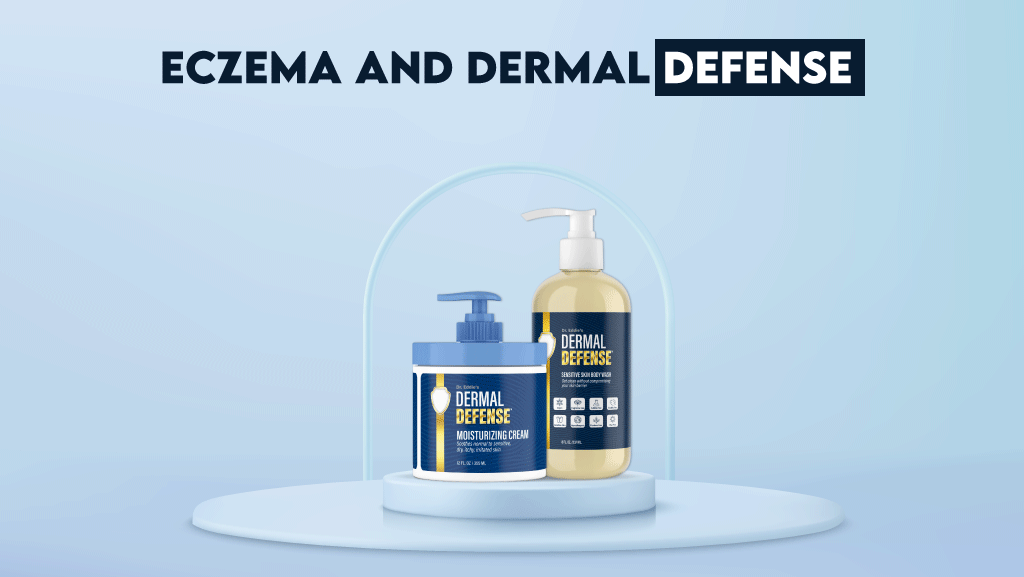
- When you have eczema-prone or sensitive skin, choosing the right skincare products becomes essential. Many cleansers and moisturizers contain strong or alkaline ingredients that can leave the skin feeling drier or more irritated. If you’re looking for gentle, eczema-friendly skincare, Dermal Defense offers formulas created with sensitive skin in mind.
The Cosmetic Benefits of Low-pH Cleansing for Sensitive, Atopic Skin
Healthy skin naturally has an acidic surface pH—often called the acid mantle—which plays an important role in keeping the skin feeling smooth, comfortable, and balanced. People with eczema-prone skin often have a higher (more alkaline) pH, which may contribute to dryness and a compromised skin-feel.
Using a low-pH daily body wash can help:
- Support the skin’s natural acidity
- Help maintain a smooth, hydrated feel
- Reduce the tight, dry sensation associated with alkaline cleansers
- Support the skin’s natural surface environment
- Help the skin feel more comfortable over time
Research in cosmetic science shows that mild, acidic cleansers are gentler on sensitive skin compared to traditional soaps.
Dermal Defense Eczema Body Wash
Dermal Defense offers a fragrance-free, low-pH Eczema Body Wash designed for daily cleansing without disrupting the way sensitive skin looks and feels. The formula features a blend of plant-derived and conditioning ingredients, including:
- Licorice root extract — helps reduce the appearance of redness
- Apple fruit extract — provides antioxidant support
- Provitamin B5 (panthenol) — helps skin feel soothed and conditioned
- Aloe vera — helps calm and refresh the feel of the skin
- Hyaluronic acid — helps attract moisture to the skin for a softer, more hydrated feel
This gentle, low-pH formula cleanses without stripping essential moisture and helps support the skin’s natural surface balance, leaving it feeling clean, comfortable, and refreshed.
Dermal Defense Eczema Moisturizing Cream
The Dermal Defense Eczema Moisturizing Cream is a hypoallergenic formula created for sensitive, dry, and eczema-prone skin. It is designed to hydrate, soften, and improve the way the skin looks and feels without using harsh or irritating ingredients. Key ingredients include:
- Glycerin — a powerful humectant that helps draw moisture to the skin, leaving it feeling softer and more hydrated
- Snow white petrolatum — creates a protective barrier on the surface of the skin to help lock in moisture and reduce dryness
- Licorice root extract — helps improve the appearance of redness and supports a calmer-looking complexion
Together, these ingredients help hydrate, smooth, and condition dry, sensitive skin, supporting a more comfortable and healthy-looking skin surface.
Free From Common Irritants Found in Many Products
Both Dermal Defense products are doctor-developed and formulated without ingredients known to be harsh on sensitive skin, including:
- Fragrance
- Parabens
- Sulfates
- Dyes
- Alcohol
- Phthalates
This makes them well-suited for individuals seeking gentle, cosmetically elegant products for everyday use.
Conclusion
- Eczema and rosacea can look very similar, especially when they both appear as facial redness, irritation, and dryness, but the underlying causes and long-term management are different. Eczema is often linked to genetics, skin barrier impairment, and environmental triggers, while rosacea is associated with immune sensitivity, inflammation, and specific lifestyle triggers such as heat, sun exposure, and spicy foods.
- Understanding the difference between eczema and rosacea can help you recognize what may be driving your symptoms and guide you toward the most appropriate care. While neither condition has a permanent cure, consistent use of gentle skincare, identifying triggers, and following dermatologist recommendations can make a meaningful difference in how your skin looks and feels.
- For those with eczema-prone or sensitive skin, choosing the right products is essential. Dermal Defense offers low-pH, fragrance-free, cosmetically gentle formulas designed to support the way sensitive skin feels and looks–without the harsh ingredients commonly found in traditional cleansers and moisturizers. With soothing ingredients like licorice root extract, aloe vera, hyaluronic acid, glycerin, and snow white petrolatum, Dermal Defense helps maintain a more balanced, hydrated, and comfortable skin surface.
FAQs
Is rosacea painful?
Rosacea can sometimes feel painful, especially during flare-ups. Many people experience a burning, stinging, or prickling sensation, along with skin sensitivity or tightness. These symptoms often worsen with heat, sun exposure, spicy foods, or other triggers.
Does rosacea itch?
Yes, rosacea can cause itching, but the itch is usually mild. More commonly, people report burning or stinging, which tends to be more intense than the itch itself. Persistent itching is more characteristic of eczema than rosacea.
Can I use eczema cream for rosacea?
It’s best to avoid using strong eczema creams, especially those containing corticosteroids, on rosacea-prone skin unless directed by a doctor. However, you can use a gentle, hypoallergenic moisturizer, such as Dermal Defense Eczema Moisturizing Cream, to help keep the skin hydrated and comfortable. Always choose fragrance-free, non-irritating formulas.
How do I tell if I have rosacea or eczema?
If you’re unsure whether your symptoms are caused by face eczema or rosacea, these differences may help:
- Rosacea often causes visible blood vessels, flushing, and persistent redness.
- Eczema does not cause visible veins but tends to involve intense itching, dry patches, and irritation.
- Rosacea appears mainly on the cheeks, nose, chin, and forehead, while eczema can appear anywhere, especially around the eyes, mouth, and in skin folds.
- Rosacea stings or burns; eczema itches more intensely.
If symptoms overlap, a dermatologist can make a clear diagnosis.
Are eczema and rosacea linked?
No. Eczema and rosacea are different skin conditions with different underlying causes. However, both can lead to redness, dryness, and irritation on the face, which is why they can sometimes be confused.
Can you have rosacea and eczema at the same time?
Yes, although uncommon, it is possible to have both rosacea and eczema simultaneously. When symptoms overlap, it’s sometimes referred to informally as eczema–rosacea, meaning features of both conditions appear on the skin at the same time. In these cases, gentle skincare and professional guidance are especially important.

- Eczema and the Immune System: Is It Autoimmune or Immune-Mediated? - February 18, 2026
- Eczema on Black Skin and Other Skin Tones: How It Looks, Symptoms, and Diagnosis - February 18, 2026
- The Link Between Eczema and Allergies: Triggers, Atopic March, and Managing Flare-Ups - February 18, 2026