
Eczema on Black Skin and Other Skin Tones: How It Looks, Symptoms, and Diagnosis
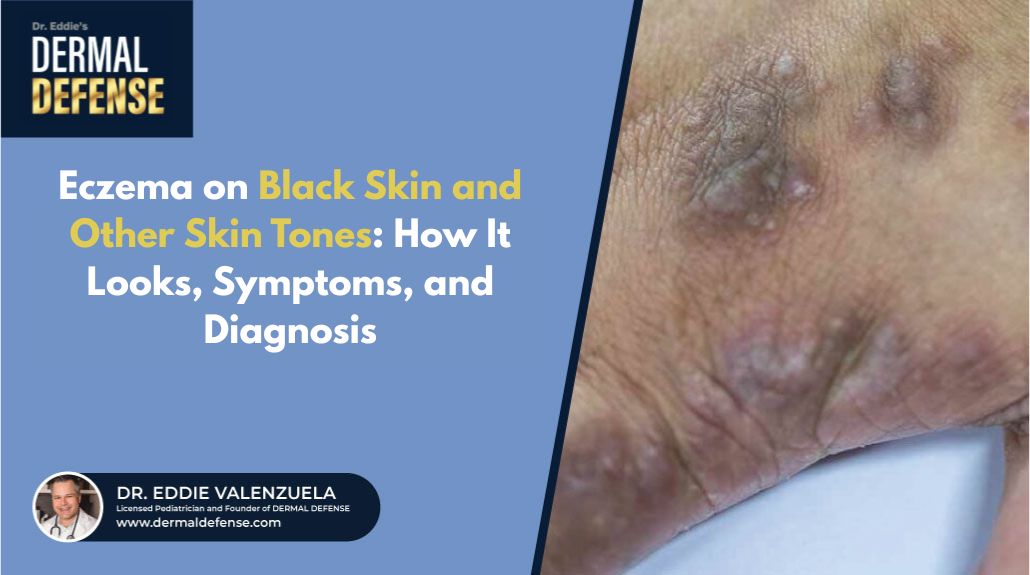
Eczema, also known as atopic dermatitis (AD), is one of the most common chronic skin conditions and can affect people of all ages and skin tones. While eczema is often described as a red, itchy rash, it does not look the same on everyone. Its appearance can vary significantly depending on skin tone.
In darker skin tones, eczema may not appear red at all. Instead, it can present as purple, brown, gray, or ashen patches, which can make early recognition and diagnosis more challenging. These differences can lead to delayed treatment and, in some cases, more severe symptoms or long-term pigment changes.
Understanding how eczema appears across different skin tones, especially eczema on Black skin, can help improve early detection, ensure accurate diagnosis, and support more effective management.
Understanding Eczema
Eczema is a chronic inflammatory skin condition characterized by itching, dryness, inflammation, and irritation. Although there are several types of eczema, atopic dermatitis is the most common and is often what people mean when they refer to “eczema.”
Eczema is more common in children, but adults can develop it as well, even if they never experienced symptoms earlier in life. This is referred to as adult-onset eczema and can present differently than childhood eczema, sometimes making diagnosis more challenging.
The exact cause of eczema is not fully understood, but it is believed to result from a combination of factors, including genetics, skin barrier dysfunction, environmental triggers, and immune system involvement.
Genetics
Eczema often runs in families. Individuals with a family history of eczema, asthma, hay fever, or other allergic conditions are at a higher risk of developing eczema. Genetic factors can influence how well the skin barrier functions and how the immune system responds to environmental triggers.
Skin Barrier Dysfunction
In people with eczema, the skin barrier does not function as effectively as it should. This allows moisture to escape more easily and makes the skin more vulnerable to irritants, allergens, and microbes, leading to dryness and inflammation.
Environmental Factors
Environmental triggers such as harsh soaps, fragrances, pollution, pollen, and extreme weather conditions can aggravate eczema symptoms. These triggers are more likely to cause flare-ups when the skin’s protective barrier is already compromised.
Immune Dysregulation
Eczema is associated with immune dysregulation, meaning the immune system mounts an exaggerated inflammatory response to substances that are typically harmless. This immune activity contributes to itching, inflammation, and flare-ups but does not indicate a weak immune system or an autoimmune disease.
Eczema Symptoms Across All Skin Tones
Eczema tends to cause a core set of symptoms that can occur in people of all skin tones. While the appearance of eczema may differ depending on skin color, the underlying symptoms are generally consistent.
Common eczema symptoms include:
- Intense itching, which is often the earliest and most persistent symptom
- Dry, flaky skin
- Increased skin sensitivity
- Scaly or rough patches
- Inflammation and swelling
- Thickened skin from chronic scratching (lichenification)
- Skin oozing or crusting in more severe or infected cases
Although these symptoms can affect anyone, skin tone can influence how visible inflammation appears. For example, redness may be easy to see on lighter skin but much less noticeable on darker skin tones. Because of this, eczema in skin of color may be harder to recognize early, even when symptoms such as itching and texture changes are significant.
Understanding these shared symptoms helps explain why the question “what does eczema look like?” does not have a single visual answer, especially when comparing eczema across different skin tones.
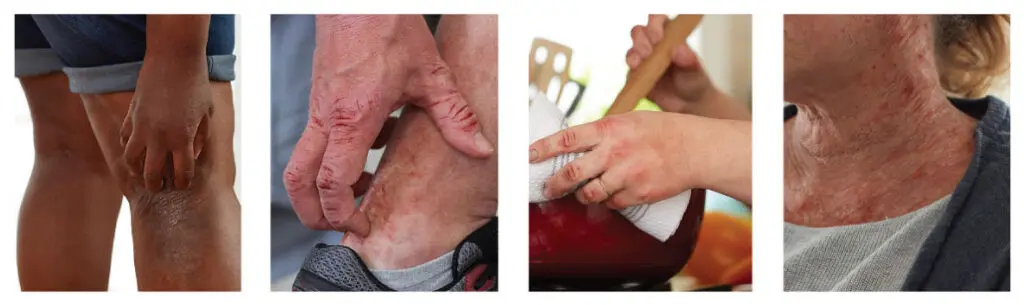
If you are wondering “what does eczema look like on black skin?”, the images above can help illustrate how eczema appears across different skin tones. Visual examples are especially helpful because eczema does not always look the same on everyone.
These examples also show how eczema rashes on Black skin may appear darker or textured rather than visibly red.
These eczema images can also help differentiate eczema from other skin conditions that may look similar, such as psoriasis or rosacea.
On lighter skin tones, eczema often appears red or pink. On darker and Black skin tones, inflammation may appear brown, purple, gray, or ashen rather than visibly red, which can make eczema harder to recognize.
How Eczema Appears in Different Skin Tones
Eczema has the same underlying causes and core symptoms across all skin tones, including itching, dryness, and inflammation. However, skin tone can significantly affect how those symptoms appear on the skin’s surface, particularly when it comes to color changes and visible inflammation.
Because redness (erythema) is a key visual clue used to identify eczema, differences in how erythema appears across skin tones can make eczema easier or harder to recognize.
These presentation differences are especially important when identifying atopic eczema on Black skin, where redness may be less visible.
Eczema on Lighter Skin
On lighter skin tones, eczema is often easier to identify because inflammation typically appears as red or pink patches. These areas may look irritated, swollen, or raw and are often clearly distinguishable from the surrounding skin.
In lighter skin, eczema commonly affects flexural areas, such as:
- Behind the knees
- Inside the elbows
- The neck
- Wrists and ankles
The combination of visible redness and itching often leads to earlier recognition and diagnosis.
Eczema on Medium or Olive Skin
On medium or olive skin tones, eczema may not appear bright red. Instead, inflammation can present as:
- Darker brown, purple, or muted red patches
- Areas that appear darker than the surrounding skin
- Skin that looks bruised or sunburned
In these skin tones, changes in skin texture, such as roughness or scaling, and ongoing itching are often more noticeable signs of eczema than redness alone.
Eczema on Black Skin and Darker Skin Tones
Eczema on Black skin and darker skin tones often looks different from the classic “red rash” commonly shown in medical images. In these skin tones, eczema may appear as:
- Dark brown, purple, or grayish patches
- Ashy or dull areas of skin
- Small raised bumps or papules
- Follicular accentuation, where bumps form around hair follicles and resemble goosebumps
- Thickened or leathery skin (lichenification) from chronic scratching
In darker skin tones, redness may be subtle or difficult to detect, which can make eczema harder to recognize–especially in early stages. Research has shown that reduced visibility of erythema in skin of color can contribute to delayed diagnosis or underestimation of disease severity.
Eczema may involve extensor surfaces such as the arms and legs or present in follicular patterns, though flexural areas can still be affected.
People with darker skin tones are also more likely to experience post-inflammatory hyperpigmentation or hypopigmentation after an eczema flare, which can persist even after active inflammation has resolved.
Eczema on Light vs Dark Skin
Eczema affects people of all skin tones, but its visible features can differ significantly depending on skin color. These differences can influence how quickly eczema is recognized and diagnosed, especially when inflammation is less visually apparent.
The table below highlights some of the key differences in how eczema may appear on lighter versus darker skin tones.
| Feature | Light Skin | Dark / Black Skin |
| Color of rash | Red or pink | Brown, purple, gray, or ashen |
| Visibility of inflammation | More obvious | Often subtle or less visible |
| Lesion appearance | Flat patches or plaques | Papules, follicular accentuation, or raised bumps |
| Lichenification (thickened skin) | Can occur | Very common with chronic scratching |
| Post-flare pigmentation changes | Mild or temporary redness | Higher risk of hyperpigmentation or hypopigmentation |
| Texture changes | May be present | Often prominent and more noticeable |
| Risk of delayed diagnosis | Lower | Higher due to atypical appearance |
Why These Differences Matter
On lighter skin, redness is often the most noticeable sign of eczema, making inflammation easier to identify early. On darker and Black skin tones, inflammation may not appear red at all, and changes in texture, pigmentation, and persistent itching may be more reliable indicators than color alone.
Because of these differences, eczema in skin of color may be:
- Underrecognized in early stages
- Misdiagnosed as another condition
- Diagnosed later, when symptoms are more severe
Understanding these visual distinctions helps improve early recognition, reduces misdiagnosis, and supports more equitable care across all skin tones.
Diagnosing Eczema in Skin of Color
Eczema is typically diagnosed through a combination of medical history and physical examination. There is no single test that confirms eczema, which makes careful clinical evaluation especially important.
Doctors generally diagnose eczema by:
- Examining the appearance and distribution of skin changes
- Asking about symptoms such as itching, dryness, and flare-ups
- Reviewing personal and family history of eczema, asthma, or allergies
- Identifying possible environmental or lifestyle triggers
In some cases, additional tests may be used to rule out other conditions, including:
- Skin prick testing or blood tests for allergies
- Patch testing to identify contact dermatitis
- Fungal testing if infection is suspected
Why Diagnosis Can Be More Challenging in Skin of Color
Diagnosing eczema in people with darker skin tones can be more difficult because inflammation may not present as visible redness. Instead, eczema may appear as darker patches, purple or gray discoloration, follicular bumps, or changes in skin texture.
According to Eczema in skin of color resources, reduced visibility of erythema can lead to:
- Underrecognition of active inflammation
- Underestimation of disease severity
- Delayed or missed diagnosis
The National Eczema Association also notes that eczema in skin of color is often diagnosed later, which may result in more severe symptoms and a higher risk of long-term pigment changes.
Conditions Commonly Confused With Eczema
Because eczema can look different on darker skin tones, it is sometimes mistaken for other skin conditions, including:
- Psoriasis
- Rosacea
- Fungal infections
- Lichen planus
Misdiagnosis can delay appropriate care and allow symptoms to worsen over time, increasing the risk of chronic inflammation and post-inflammatory hyperpigmentation or hypopigmentation.
Why Early and Accurate Diagnosis Matters
Early and accurate diagnosis helps:
- Improve symptom control sooner
- Reduce the severity and frequency of flare-ups
- Lower the risk of long-lasting pigment changes
- Support healthier skin barrier function over time
Understanding how eczema presents across different skin tones is an important step toward more equitable, effective care.
Eczema Treatment
Eczema treatment focuses on relieving symptoms, reducing inflammation, and preventing flare-ups by protecting the skin barrier. While eczema cannot be cured, many people are able to manage symptoms effectively with consistent daily care and medical guidance when needed.
Key components of eczema management include gentle cleansing, regular moisturizing, and minimizing known triggers.
Cleansing
Gentle cleansing helps remove irritants without stripping the skin of its natural protective oils.
General recommendations include:
- Cleansing the skin once daily with a mild, fragrance-free cleanser
- Using lukewarm water instead of hot water
- Avoiding harsh soaps, scrubs, or heavily scented products
- Gently patting the skin dry rather than rubbing
For facial eczema, a gentle cleanser suitable for sensitive skin may be used twice daily.
Moisturizing
Dryness is one of the most prominent features of eczema. Regular moisturizing helps hydrate the skin and reinforce the skin barrier.
Best practices include:
- Applying moisturizer immediately after washing while the skin is still slightly damp
- Moisturizing at least twice daily
- Increasing frequency during flares or in dry environments
Soak and Seal Method
The soak and seal method is often recommended to help soothe itching and dryness. This involves:
- Bathing in lukewarm water
- Applying a thick cream-based moisturizer within three minutes of bathing to lock in moisture
Creams are generally preferred over lotions because they provide more effective barrier support.
Wet Wrap Therapy
Wet wrap therapy may be recommended by healthcare providers for severe eczema or intense itching. This method involves:
- Applying an emollient or moisturizer to affected areas
- Covering the skin with a damp layer of gauze or cloth
- Placing a dry layer over the top
This approach can help improve hydration and reduce inflammation during flares.
Dermal Defense Eczema Care for Every Skin Tone

Protecting and supporting the skin barrier is central to managing eczema across all skin tones. This is best achieved through a consistent eczema skincare routine and the use of products formulated for sensitive, eczema-prone skin.
Dermal Defense products were developed to align with these principles by focusing on gentle cleansing, barrier protection, and ingredient transparency.
Dermal Defense products are formulated without common irritants and are free from fragrances, parabens, sulfates, phthalates, and other harsh additives. You can learn more about the philosophy behind our formulations and ingredients here.
Dermal Defense Eczema Body Wash
- Gently cleanses without stripping natural oils.
- Maintains the skin’s moisture barrier with a low-pH, soap-free formula.
- Soothes dryness and irritation with ingredients such as licorice root extract, apple fruit extract, oatmeal extract, and aloe vera
- Designed for daily use on sensitive, eczema-prone skin.
- Suitable for both children and adults.
Dermal Defense Eczema Cream
- Helps lock in moisture to reduce dryness and support barrier function.
- Supports skin barrier repair, reducing irritation and sensitivity.
- Helps soothe the appearance of irritation with licorice root extract.
- Strengthens the skin barrier with glycerin and snow white petrolatum.
- Non-greasy and fast-absorbing, suitable for face and body.
Conclusion
Eczema can affect anyone, regardless of age or skin tone, but its appearance can vary significantly depending on skin color. On lighter skin, eczema often presents as red or pink patches, while on darker and Black skin tones it may appear brown, purple, gray, or ashen. These differences can make eczema harder to recognize early and may contribute to delayed diagnosis or more severe symptoms.
Understanding how eczema looks across different skin tones, especially in skin of color, helps improve early identification, supports accurate diagnosis, and reduces the risk of long-term pigment changes. Regardless of skin tone, the foundation of eczema management remains the same: gentle cleansing, consistent moisturizing, trigger avoidance, and protecting the skin barrier.
For those looking to simplify their routine, products designed specifically for eczema-prone skin can help support these goals. The Dermal Defense Eczema Skincare Bundle is formulated to support gentle cleansing and barrier care as part of an overall eczema-friendly skincare routine.
By focusing on skin barrier support and understanding how eczema presents on different skin tones, many people are able to manage symptoms more effectively and maintain healthier, more comfortable skin.

- Can Eczema Cause Swollen Lymph Nodes? - March 24, 2026
- Why Eczema-Prone Skin Loses Moisture Easily (And How to Repair the Skin Barrier) - March 24, 2026
- Eczema and the Immune System: Is It Autoimmune or Immune-Mediated? - February 18, 2026
Recent Post

Frequently Asked Questions
What does eczema look like on Black skin?
Are eczema rashes on Black skin different from lighter skin tones?
Why is eczema harder to diagnose on darker skin tones?
Can eczema on Black skin cause dark spots or light patches?
Is atopic eczema on Black skin more severe?
What are the most common symptoms of eczema across all skin tones?
How is eczema treated in people with skin of color?
Can eczema on Black skin be mistaken for other conditions?
When should someone with eczema see a doctor?
- Can Eczema Cause Swollen Lymph Nodes? - March 24, 2026
- Why Eczema-Prone Skin Loses Moisture Easily (And How to Repair the Skin Barrier) - March 24, 2026
- Eczema and the Immune System: Is It Autoimmune or Immune-Mediated? - February 18, 2026