Eczema vs. Contact Dermatitis: How to Tell Them Apart
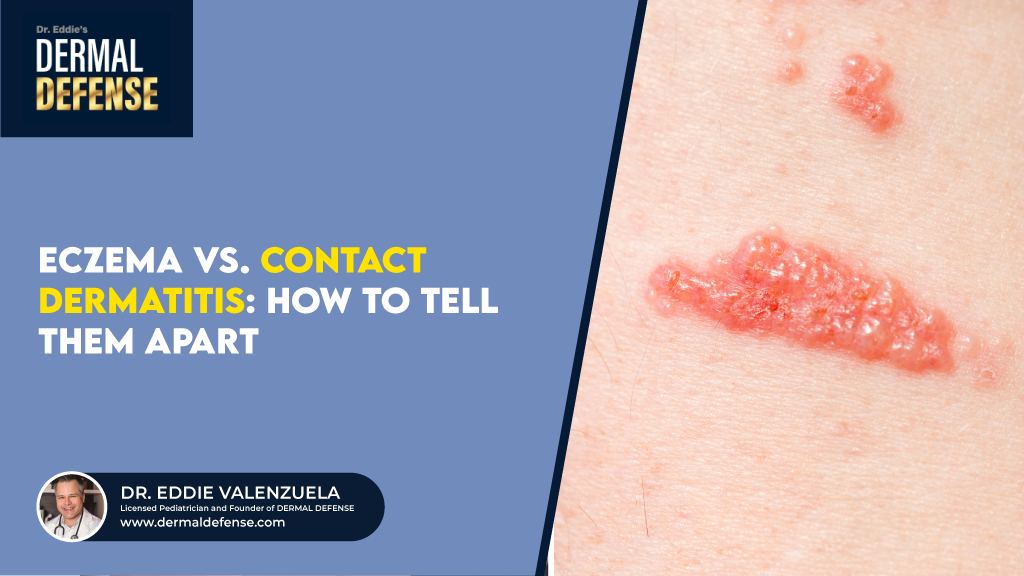
Welcome to the guide for solving one of dermatology’s most common mix-ups. Eczema is one of the most common skin conditions. According to the Allergy and Asthma Network, it affects around 31.6 million people in the USA. So, when you experience itchy, dry, inflamed, and red skin, the first thing that might come to mind is eczema.
But do you know eczema is actually an umbrella term covering several different types? Atopic dermatitis is one of its most common types, and both terms are often used interchangeably.
However, there is another type of eczema, contact dermatitis, which is its second most common type and can also lead to red, itchy skin rashes. So how do you know you’re angry red rash is a result of atopic dermatitis or contact dermatitis?
That is why we decided to write this blog, to help you understand the differences between eczema vs contact dermatitis so you can get the right treatment plan on time.
What is Eczema?
Here, when we say eczema, we are basically talking about atopic dermatitis. It is a chronic skin condition that can occur at any age. However, it is more common among children below the age of 5.
It usually affects the
- Face
- Neck
- Eyelids
- Chest
- Arms
- Elbows
- Knees
- Feet.
Some common symptoms that you may experience with atopic dermatitis are:
- Itchy skin
- Dryness
- Oozing and crusting of skin
- Red rashes
- Scaly patches
- Small bumps
What Causes Eczema?
Now you might be wondering what causes eczema. With atopic dermatitis, it is usually things happening inside your body. It is believed to be caused by genetics. Fillagrin is a protein that helps strengthen the skin’s natural barrier.
But people with atopic dermatitis have a gene mutation that prevents them from producing enough filaggrin. What is the result?
- Their skin becomes more porous.
- Skin’s natural barrier becomes weak.
- Their skin loses moisture more quickly.
- Outside irritants and allergens can penetrate the skin more easily.
This makes you experience that red, dry, irritated skin. This genetic link explains why people who have a family history of atopic dermatitis are more likely to experience it.
What Is Contact Dermatitis?
A common question people ask is, “Is contact dermatitis the same as eczema?” The short answer is yes–contact dermatitis is a specific type of eczema.
Contact dermatitis is an inflammatory skin condition that occurs when the skin touches a substance that triggers irritation or an allergic reaction. Although it can occur at any age, it is most frequently seen in adults.
Common Symptoms of Contact Dermatitis
The symptoms often resemble those of atopic dermatitis and may include:
- Severe itching
- Raised or inflamed bumps
- Dry, cracked, or scaly skin
- Burning or stinging sensation
- Blistering
- Red rash
- Hives
One key difference: contact dermatitis appears specifically on the area where the skin was exposed to the irritant or allergen, whereas atopic dermatitis tends to be more widespread.
What Causes Contact Dermatitis?
The cause of contact dermatitis depends on the type you are experiencing. There are two main types: allergic contact dermatitis and irritant contact dermatitis.
1. Allergic Contact Dermatitis
Allergic contact dermatitis develops when the skin has an immune reaction to a specific allergen, such as poison ivy, certain metals (like nickel), fragrances, or preservatives.
After repeated exposure, the immune system becomes sensitized and releases T-cells, which in turn release chemicals that trigger:
- Redness
- Swelling
- Itching
- Inflammation
Even a small amount of the allergen can cause a noticeable flare once the immune system is primed.
2. Irritant Contact Dermatitis
Irritant contact dermatitis occurs when the skin is directly damaged by an irritating substance, such as harsh soaps, cleaning products, solvents, or chemicals in skin care products. Unlike allergic reactions, no immune “sensitization” is needed—anyone can develop irritation with enough exposure.
When the skin barrier is disrupted, the body releases pro-inflammatory cytokines, which lead to:
- Moisture loss
- Increased skin sensitivity
- Redness
- Burning or itching
- Greater penetration of bacteria and environmental triggers
Over time, the damaged skin barrier becomes less effective at protecting against irritants, making flare-ups more frequent.
Contact Dermatitis Rash vs Eczema Rash Pictures
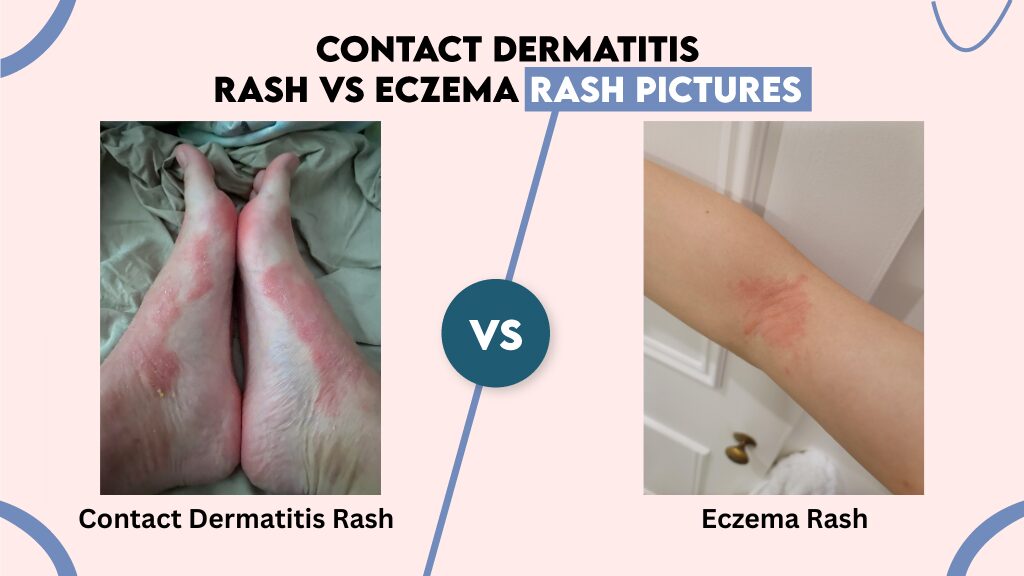
If you are wondering “What does contact dermatitis look like? or What does an eczema rash look like?” then these pictures can help you understand. However, it can still be very difficult to tell them apart.
Difference Between Contact Dermatitis vs Eczema
Contact dermatitis and atopic dermatitis (AKA eczema) usually share similar symptoms such as itching, redness, dry, scaly skin, which is why it is often difficult to tell them apart.
However, here are a few key differences that you should keep an eye out for to figure out whether you are dealing with contact dermatitis or eczema. According to the National Eczema Association, atopic dermatitis runs in families while contact dermatitis does not.
| Eczema | Contact Dermatitis | |
| Causes | Believed to be caused by a combination of factors such as genetics, skin barrier dysfunction, and environmental triggers. | It occurs when the skin comes in contact with a certain irritant or allergen. |
| Triggers |
|
|
| Onset | It can occur at any age, but is more common in children | It can occur at any age, but is more common in adults |
| Flare-ups | Usually, flares occur periodically, which may go dormant for years and then return unexpectedly | Flares up quickly after the skin comes in contact with the irritant and usually resolves after a few days or weeks. |
| Itching | It causes severe, persistent itching. | It causes more of a stinging or burning sensation than the itch. |
| Location | It can appear anywhere on the body, such as the face, hands, knees, elbows, neck, and feet. | The rash mostly appears only where the contact with the allergen or irritant has occurred. |
| Risk Factor | More common in people who have a family history of atopic dermatitis, asthma, hay fever, and allergies | It can affect anyone; however, people who are often exposed to chemicals at work are more likely to experience it. |
| Duration | Chronic, which means it can be a lifelong issue with flare-ups and remissions. | Acute, which means it usually starts getting better once contact with the trigger has stopped. |
| Diagnosis | It is diagnosed on the basis of the family’s medical history, physical examination of symptoms, and in some cases, a patch test. | Most of the time patch a test is conducted to figure out the allergen or irritant. |
| Treatment |
|
|
Treatment for Moderate Eczema and Contact Dermatitis
The treatment approach for moderate eczema and contact dermatitis is very similar because both conditions involve inflammation, itching, and a weakened skin barrier. Managing symptoms effectively requires restoring moisture, reducing irritation, and avoiding triggers.
How to Get Rid of Eczema
If you’re experiencing eczema flare-ups, these evidence-based steps can help soothe itching, redness, dryness, and irritation:
1. Use a Gentle, Fragrance-Free Cleanser Daily
Wash the skin once a day with a fragrance-free eczema body wash to remove buildup without stripping moisture.
2. Moisturize at Least Twice Daily
Apply an eczema moisturizing cream immediately after bathing and again throughout the day to lock in hydration and help repair the skin barrier.
3. Avoid Triggers Whenever Possible
Common triggers include harsh soaps, fragrances, stress, allergens, and extreme temperatures. Reducing exposure can significantly minimize flare-ups.
4. Use Lukewarm or Cool Water
Hot water can dry out the skin and worsen inflammation. Opt for lukewarm or cool water when bathing and washing hands.
5. Avoid Scratching
Scratching damages the skin barrier, increases inflammation, and raises the risk of infection. Consider using cold compresses or anti-itch creams when needed.
6. Seek Medical Care for Persistent Symptoms
If an eczema skin-care routine isn’t enough, a clinician may recommend:
- Topical steroid creams
- Calcineurin inhibitors (e.g., tacrolimus, pimecrolimus)
- Antibiotic ointments (if infection is present)
- Oral medications for severe or widespread eczema
How to Treat Contact Dermatitis
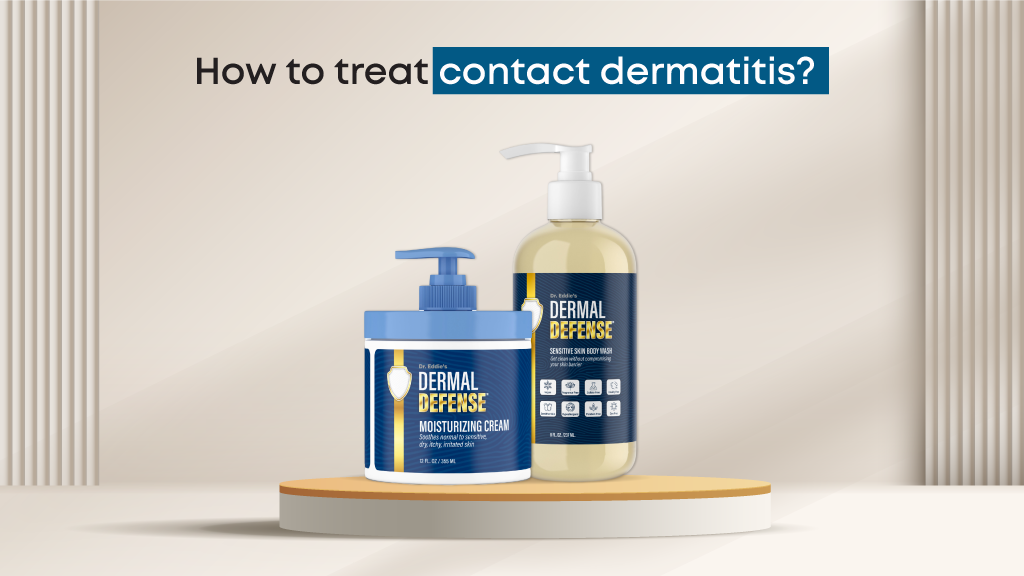
If you’re asking, “How do I get rid of contact dermatitis fast?” the key is removing the cause and protecting the skin as it heals.
1. Identify and Avoid the Trigger
This is the most important step. Symptoms will not improve until the irritant or allergen is removed from your routine or environment.
2. Use Gentle, Eczema-Friendly Skin-Care Products
Choose products that are free from fragrances, dyes, sulfates, and harsh surfactants.
Dermal Defense Eczema Body Wash and Eczema Moisturizing Cream are excellent options because they help:
- Strengthen the skin barrier
- Reduce dryness and irritation
- Minimize exposure to potential triggers
3. Restore Moisture and Calm Inflammation
Consistent moisturizing helps soothe redness, itching, and stinging, allowing the skin to recover more quickly.
4. Medical Treatments for More Severe Cases
A healthcare provider may recommend:
- Topical corticosteroids to reduce inflammation
- Prednisone for short-term severe flares
- Topical or oral antihistamines for itching
- Oral steroids if symptoms are extensive or persistent
Conclusion
Understanding the difference between eczema (atopic dermatitis) and contact dermatitis is essential for choosing the right treatment and preventing future flare-ups. Although both conditions can cause itching, redness, dryness, and rashes, their underlying causes are not the same.
Eczema is typically linked to genetics and a weakened skin barrier caused by filaggrin deficiency. It can show up on many areas of the body and often flares intermittently.
Contact dermatitis, on the other hand, develops when the skin reacts to a specific irritant or allergen, and the rash usually appears only on the area that made contact.
Eczema often causes persistent itching, while contact dermatitis is more likely to cause a burning or stinging sensation, sometimes with blistering.
No matter which condition you have, using the right gentle, fragrance-free, dermatologist-developed skincare is one of the best ways to protect your skin and prevent symptoms from worsening.
That’s why Dr. Eddie created the Dermal Defense Eczema Skincare Bundle, including a fragrance-free cleanser and moisturizing cream designed for sensitive, eczema-prone skin. Both formulas avoid harsh irritants, such as dyes, sulfates, parabens, and phthalates, and instead include skin-soothing ingredients like licorice root extract to soothe irritation and support a healthier skin barrier.
Taking care of the skin with the right products is the first step toward reducing flare-ups. Gentle, well-designed skincare cosmetics are a must whether you’re dealing with eczema, allergic contact dermatitis, or irritant contact dermatitis.

- Can Eczema Cause Swollen Lymph Nodes? - March 24, 2026
- Why Eczema-Prone Skin Loses Moisture Easily (And How to Repair the Skin Barrier) - March 24, 2026
- Eczema and the Immune System: Is It Autoimmune or Immune-Mediated? - February 18, 2026
Recent Post
Frequently Asked Questions
How can you tell the difference between contact dermatitis and eczema?
Can you have both eczema and contact dermatitis at the same time?
Can contact dermatitis go away on its own?
What happens if I leave contact dermatitis untreated?
What do dermatologists recommend for contact dermatitis?
- Can Eczema Cause Swollen Lymph Nodes? - March 24, 2026
- Why Eczema-Prone Skin Loses Moisture Easily (And How to Repair the Skin Barrier) - March 24, 2026
- Eczema and the Immune System: Is It Autoimmune or Immune-Mediated? - February 18, 2026