A Daily Skin-Care Routine for Eczema-Prone Skin
A useful eczema routine is one you can repeat on an ordinary day. Gentle washing, regular moisturizing and treatment for active inflammation each have a different job. Keeping those jobs clear makes it easier to care for dry skin without adding unnecessary products or steps.
This guide describes everyday care for eczema-prone skin. A clinician should assess a new or uncertain rash and help tailor care for an infant, persistent symptoms or a severe flare. For background on the condition and its different forms, start with our eczema overview.
Begin with products your skin tolerates
Choose a mild, fragrance-free cleanser and a fragrance-free moisturizer. Creams and ointments are often useful for dry skin because they can provide more substantial moisture support than a light lotion. The best fit also depends on where you are applying the product and whether its texture makes regular use practical.
Read the complete ingredient list if you have a known allergy. “Natural,” “hypoallergenic” and “sensitive skin” do not guarantee that a product will suit everyone. Cetyl and stearyl alcohol are fatty alcohols used for texture and skin feel; they are different from drying ethanol. There is no reason to reject every ingredient with “alcohol” in its name.
Introduce one new product at a time. Trying it on a small area can reveal obvious irritation, although a home trial cannot rule out an allergy or replace medical patch testing. Stop a product that clearly worsens the skin.
Keep morning care proportionate
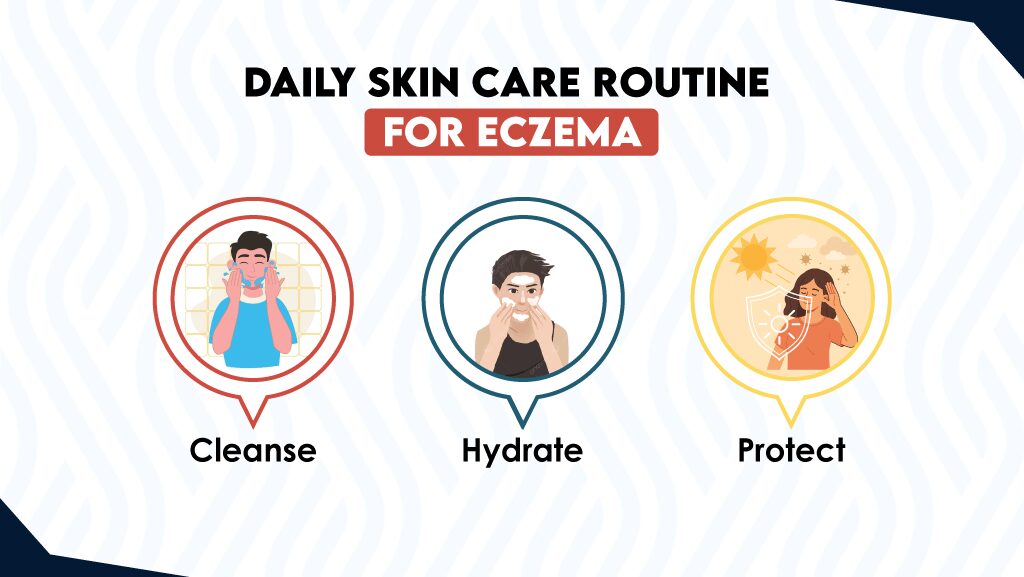
Check whether the skin feels dry, tight or irritated, and moisturize where needed. Cleanse when there is sweat, residue or another reason to wash; repeated full cleansing is not automatically necessary. Use any prescribed treatment on the areas and schedule your clinician has specified.
Choose soft, comfortable clothing and avoid overheating. For outdoor time, use appropriate sun protection: shade, protective clothing and a sunscreen your skin tolerates. Sunscreen protects against ultraviolet exposure; it does not form a general shield against dust or other eczema triggers.
Wash gently and moisturize promptly
Use lukewarm water and keep bathing brief. Apply cleanser gently with your hands instead of a rough scrub or loofah. Rinse thoroughly, then pat with a soft towel, leaving the skin slightly damp.
Apply moisturizer soon afterward. This helps keep some of the water from bathing in the outer skin. Pay attention to easily missed areas such as wrists, ankles and hands, while avoiding the eyes and following the product label for sensitive sites.
If washing increases dryness, review the water temperature, duration, cleanser and amount of friction. Our bathing and swimming guide explains these adjustments in more detail.
Reapply moisture as the day requires
Twice-daily moisturizing is a practical starting routine, with additional applications after handwashing or whenever dry areas need it. You do not need to wait for skin to become visibly flaky. Keeping moisturizer near a sink or the place you get dressed can make the habit easier to maintain.
Dermal Defense Moisturizing Cream is a leave-on option for the face and body. Glycerin attracts moisture and petrolatum helps limit water loss. Apply gently rather than rubbing hard, and use a small amount on facial skin before adding more where needed.
For a beard or mustache, work the cream through the hair so it reaches the dry skin underneath. The face and body application guide covers timing, texture and these smaller areas.
Make evening care support comfort and sleep
Before bed, check dry areas, moisturize and follow any prescribed evening treatment. A comfortable room temperature and soft sleepwear may reduce irritation from heat and rubbing. If itching keeps you awake, tell your clinician; a bedtime routine alone may not control an active flare.
A cool, damp compress can offer temporary relief. Keep nails short to reduce damage from scratching, and avoid applying unprescribed anti-itch or antibiotic products just because the skin itches. Some ingredients can cause additional irritation or contact allergy.
Use trigger awareness without unnecessary restrictions
Common practical irritants include fragrance, rough fabric, cleaning products, heat and sweat, but each person’s pattern differs. Change one suspected exposure at a time when possible. A short symptom record may be more informative than buying an entirely new routine.
Do not remove major foods from your diet or a child’s diet solely because eczema is present. Food allergy requires an appropriate history and assessment. Our eczema and allergies guide explains the distinction.
Recognize when skin care needs medical support
Moisturizing supports the skin barrier, but it is not a replacement for treatment of persistent inflammation. Contact your clinician if symptoms are worsening, interfering with sleep or not responding to the agreed plan. Prescribed treatment may need adjustment rather than more frequent washing or more products.
Increasing pain, warmth, pus, rapidly worsening skin or fever needs prompt assessment. Clusters of painful blisters, especially with fever or feeling unwell, can signal a serious infection and should be assessed urgently. Wet wraps and bleach baths should be used only with specific professional guidance.
Reference: NIAMS: diagnosis, treatment and daily care for atopic dermatitis.

- Eczema and Swollen Lymph Nodes: Causes and When to Seek Care - March 24, 2026
- Eczema-Prone Skin and Moisture Loss: Understanding the Skin Barrier - March 24, 2026
- Eczema and the Immune System: Inflammation and Barrier Function - February 18, 2026