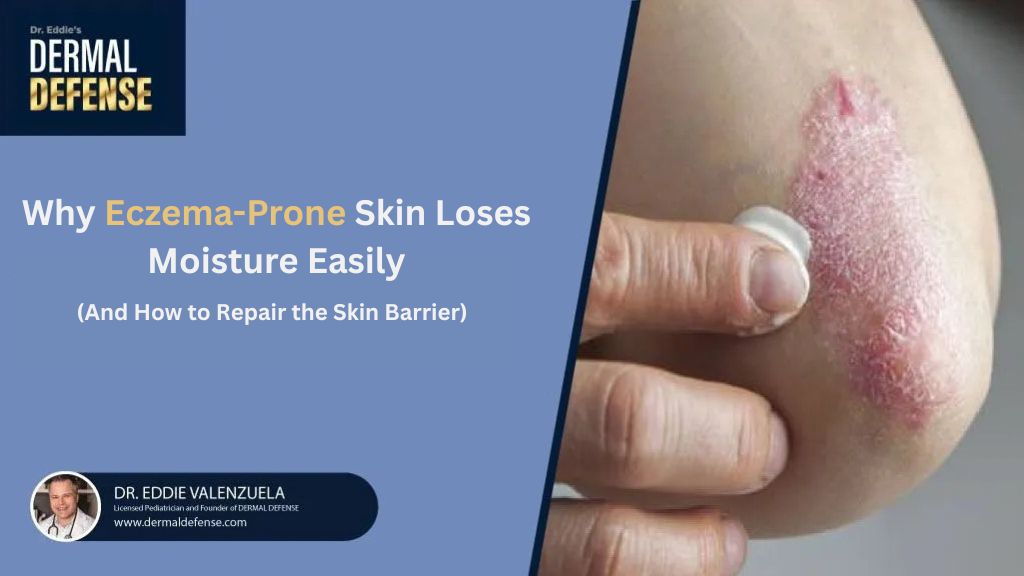
Why Eczema-Prone Skin Loses Moisture Easily (And How to Repair the Skin Barrier)
Doctor’s Answer: Why Eczema-Prone Skin Loses Moisture So Easily
Eczema-prone skin loses moisture quickly because the skin barrier is weaker and less efficient than healthy skin. Normally, tightly packed skin cells, ceramides, and natural oils work together to lock in water and keep irritants out. In eczema, these protective elements are reduced or altered, allowing moisture to escape more easily.
This is not just surface dryness. It is a barrier problem.
When the skin barrier is not functioning properly, water escapes through the outer layer of the skin, a process known as transepidermal water loss. Research shows that lower filaggrin levels, reduced ceramides, and lipid abnormalities all contribute to this process, leaving the skin dry, itchy, and more sensitive.
That is why moisturizing alone often does not feel like enough. If the barrier is not supported, the moisture you add continues to escape.
Daily care that focuses on gentle cleansing, consistent moisturizing, and avoiding triggers helps support the skin barrier and reduce water loss, improving hydration and overall comfort.
Dr. Eddie Valenzuela
If you have eczema-prone skin, you have probably noticed something frustrating:
You moisturize, and a few hours later your skin feels dry again.
This is not typical dryness. It is a sign of a damaged skin barrier, which is something many people with eczema deal with every day.
This is also one of the key differences between eczema and dry skin.
What is happening beneath the surface explains why this keeps occurring. When the barrier is not functioning properly, your skin cannot hold onto moisture, no matter how often you apply it. That is why dryness returns so quickly.
Understanding this process is key if you want to better manage common eczema symptoms and improve how your skin feels day to day.
In this article, we will walk through why eczema-prone skin loses moisture so easily, how to repair the weakened barrier, reduce transepidermal water loss, and build a daily routine that helps your skin stay hydrated for longer.
Understanding Skin and Its Natural Barrier
Your skin is more than just a surface. It is a protective system that helps defend your body from infection, irritation, and environmental stress.
It is made up of three main layers:
- Epidermis (outer layer): Thin but durable, containing skin cells, water, and fats that help maintain hydration and act as the primary barrier
- Dermis (middle layer): Provides strength, flexibility, and support
- Subcutaneous layer (deepest layer): Fatty tissue that cushions and insulates the body
These layers work together to keep your skin healthy, hydrated, and resilient.
The most important layer when it comes to eczema is the outermost part of the epidermis, where the skin barrier lives. This barrier is responsible for holding moisture in and keeping irritants out.
Healthy Skin Barrier
When the skin barrier is functioning properly, it acts as a natural shield:
- Locks in moisture, keeping skin soft and hydrated
- Protects against irritants, allergens, and bacteria
- Maintains strength through tightly packed skin cells, natural oils, ceramides, and lipids
When this system is intact, skin feels comfortable and stable.
Compromised Skin Barrier
In eczema-prone skin, this barrier does not function as efficiently.
Research shows that people with eczema often have lower levels of ceramides and essential fatty acids, which are critical for retaining moisture.
As a result:
- Water escapes through the outer layer, a process called transepidermal water loss
- Skin becomes dry, itchy, and irritated
- The skin becomes more vulnerable to infection and flare-ups
This is why eczema is not just dryness. It is a barrier problem, often described as a damaged skin barrier in eczema, and one of the main reasons symptoms persist.
Understanding the difference between a healthy skin barrier and an eczema-damaged barrier is the first step toward protecting your skin and preventing ongoing moisture loss.
Why Eczema-Prone Skin Loses Moisture So Easily
A simple way to understand this is to think of your skin like a brick wall.
In healthy skin:
- The bricks are your skin cells, tightly packed together
- The mortar is made of lipids, ceramides, and natural oils that seal everything in
This structure keeps moisture inside and irritants out.
In eczema-prone skin, that wall is not as solid. The mortar is weaker, and small gaps form. As a result, water escapes more easily and irritants get in more easily.
So what causes this?
Low Filaggrin
One major factor is low filaggrin production.
Filaggrin is a protein that helps skin cells stay tightly connected and contributes to the skin’s natural ability to retain moisture. When filaggrin levels are low, the structure of the skin becomes less compact.
Tiny gaps form in the barrier. Moisture escapes, and the skin becomes dry and itchy.
That itch leads to scratching or rubbing, which further damages the barrier and creates a cycle of dryness and irritation that can be difficult to break.
Lipid and Ceramide Deficiency
Lipids, especially ceramides, are a key part of the “mortar” that holds the skin barrier together.
People with eczema often have reduced ceramide levels and an altered lipid composition. This weakens the barrier and makes it harder for the skin to retain moisture.
Research published in Allergy, Asthma & Immunology Research shows that these lipid differences play a central role in dryness, irritation, and overall barrier dysfunction.
pH Imbalance
Filaggrin also helps maintain a healthy skin pH.
When this system is disrupted, the skin can become more alkaline. This creates an environment where bacteria can grow more easily and inflammation can increase.
The result is a barrier that is not only physically weaker, but also chemically out of balance.
Bringing It Together
So in simple terms, eczema-prone skin loses moisture easily because the barrier is compromised in multiple ways.
It is weaker structurally, due to gaps in the skin.
And it is less stable chemically, due to changes in lipids and pH.
That combination is what makes dryness, irritation, and itch so persistent.
Common Habits That Can Worsen Moisture Loss
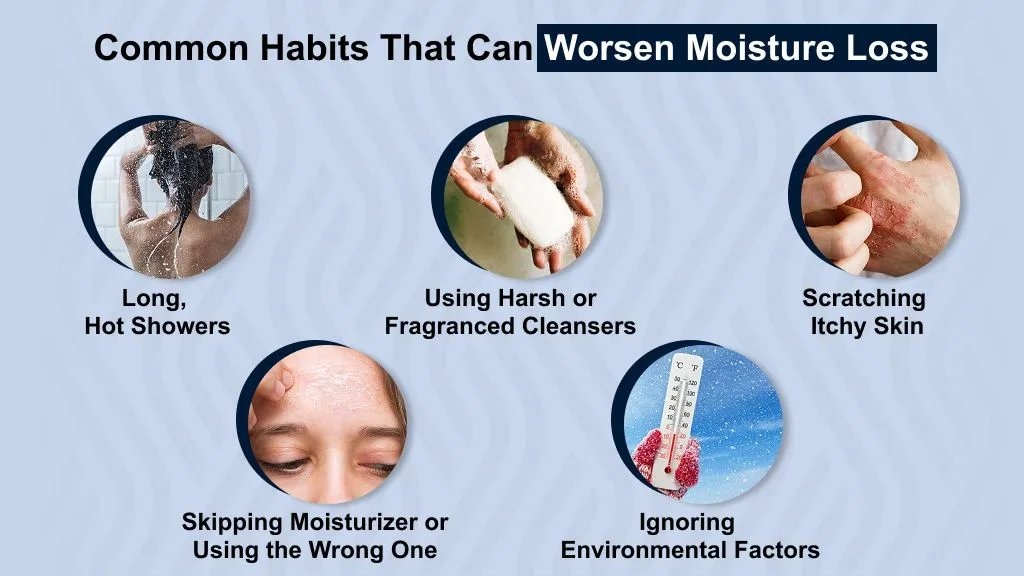
Even small daily habits can make a meaningful difference for eczema-prone skin. In many cases, it is not just the condition itself, but these everyday patterns that continue to weaken the skin barrier.
Long, Hot Showers
Steaming hot showers may feel good at the moment, but they strip away natural oils that your skin needs to function properly. This leaves the barrier more vulnerable and increases dryness and irritation.
Learn more about how hot showers affect eczema-prone skin.
What to do:
Keep showers short and use lukewarm water. Apply moisturizer immediately afterward using the “soak and seal” method to help lock in hydration.
Using Harsh or Fragranced Cleansers
Many soaps and body washes are too aggressive for eczema-prone skin. Fragrances and certain surfactants can disrupt the barrier and trigger flare-ups.
What to do:
Use a body wash for eczema-prone skin that is specifically formulated for sensitive skin, soap-free, low-pH, and hypoallergenic, such as the Dermal Defense Eczema Body Wash, to cleanse without stripping moisture.
Scratching Itchy Skin
Scratching may provide temporary relief, but it further damages the skin barrier and worsens the itch-scratch cycle.
If you want to better understand how itch behaves, explore more here: itch.
What to do:
Use a cool compress or apply moisturizer to calm the skin. Keeping nails short and using gentle pressure instead of scratching can help reduce damage.
Skipping Moisturizer or Using the Wrong One
Moisturizing inconsistently or using products that are not designed for sensitive skin allows water to escape more easily.
What to do:
Use a thicker eczema cream with barrier-supporting ingredients like glycerin. Applying immediately after bathing helps seal in moisture. A product like Dermal Defense Moisturizing Cream is designed to support hydration and reduce water loss.
Ignoring Environmental Factors
Dry indoor air, cold weather, and overheating can all increase moisture loss from the skin.
What to do:
Use a humidifier when the air is dry, protect your skin from harsh weather, and be mindful of triggers like fabrics and stress:
Eczema Treatment
Now that we know eczema-prone skin loses moisture because of a damaged skin barrier, the key to managing eczema is strengthening that barrier.
So the question becomes: how do you repair a damaged skin barrier in eczema-prone skin? Let’s break it down.
It comes down to a few consistent habits done the right way.
Cleansing
Regular bathing with a gentle body wash for eczema skin can support barrier repair by removing irritants, bacteria, and buildup without causing additional damage.
To do it correctly:
- Use a fragrance-free, low-pH cleanser designed for sensitive skin, such as Dermal Defense Eczema Body Wash
- Bathe in lukewarm water for about 10 to 15 minutes, long enough to hydrate the skin but not so long that the barrier becomes further weakened
- Apply moisturizer immediately after bathing using the “soak and seal” method, while the skin is still slightly damp
The goal is to cleanse without stripping and to trap hydration immediately afterward.
Moisturizing
Moisturizing is one of the most effective ways to support skin barrier function.
In eczema, this is not optional. It is foundational.
- Apply a fragrance-free eczema cream at least twice daily
- Moisturize immediately after bathing to help retain water in the skin
- Use thicker creams rather than lotions, which are less effective at preventing water loss
Look for ingredients that support hydration and barrier repair, such as glycerin and petrolatum.
A product like Dermal Defense Moisturizing Cream is designed to help draw moisture into the skin and create a protective layer that slows water loss.
Avoid the Triggers
Even the best routine will struggle if triggers continue to disrupt the skin barrier.
Common triggers include:
- Dry skin, dust, pet dander, and pollen
- Metals such as nickel and exposure to cigarette smoke
- Soaps, household cleaners, and fragrances
- Scratchy fabrics like wool or polyester
- Environmental factors such as dry air and stress
You can learn more about specific triggers here:
People with eczema tend to have a more reactive immune system. When triggers come into contact with the skin, inflammation increases. That inflammation further weakens the barrier, making the skin more sensitive and more prone to ongoing irritation.
Bringing It Together
There is no single step that fixes eczema. It is a process.
What makes the difference is consistency.
Gentle cleansing, regular moisturizing, and avoiding triggers work together to support the skin barrier over time. As the barrier improves, the skin becomes better at holding moisture and less reactive overall.
Does Drinking Water Help Eczema?
This is a common question.
Hydration is important for overall health, but drinking more water alone does not repair an eczema-damaged skin barrier.
Here is why:
In eczema, moisture loss happens at the surface of the skin. The problem is not that your body lacks water. The problem is that your skin cannot hold onto it.
Even if you are well hydrated, water continues to escape through the outer layer when the barrier is not functioning properly.
Drinking water supports overall skin health, but it cannot replace barrier repair or proper topical hydration.
Dermal Defense to Support Your Skin Barrier
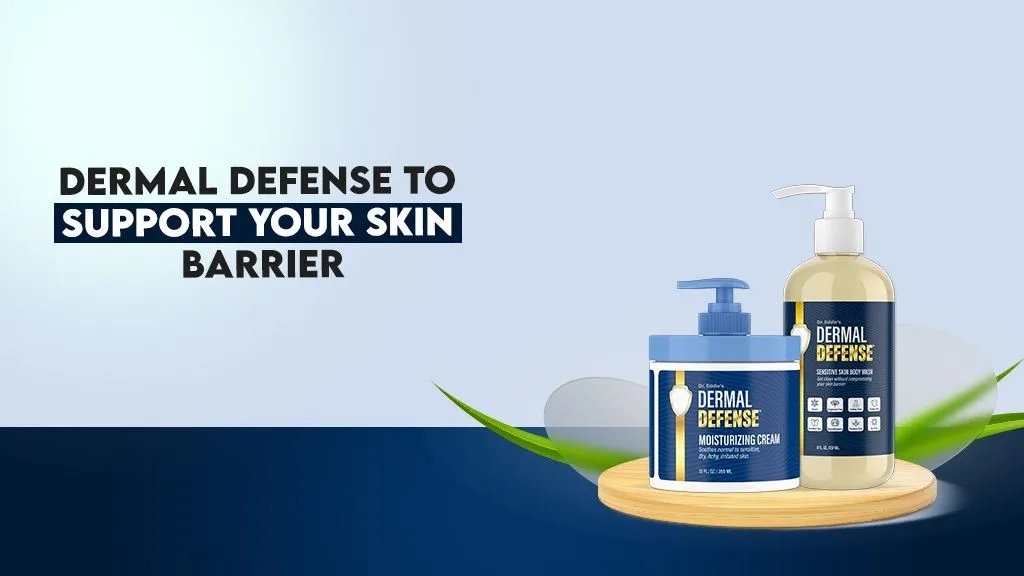
Keeping eczema-prone skin comfortable is not about using more products. It is about using the right ones, consistently, without disrupting the skin barrier.
A simple, barrier-focused routine can make a meaningful difference over time.
Step 1: Cleanse Without Stripping
Start with a gentle cleanser that removes irritants without damaging the barrier.
The Dermal Defense Eczema Body Wash is formulated for this purpose.
- Moisture-supporting ingredients: Glycerin and hyaluronic acid help attract and retain water in the skin
- Soothing botanicals: Licorice root, aloe vera, oatmeal, and apple extract help keep skin calm and comfortable
- Barrier-friendly formulation: Cleanses without stripping natural oils, so skin feels clean but not tight
A common problem with many cleansers is that they leave skin feeling dry immediately after use. That is a sign the barrier has been disrupted.
The goal here is different. Clean skin without paying that price.
Step 2: Lock In Moisture and Protect the Barrier
After cleansing, the focus shifts to helping the skin hold onto hydration.
The Dermal Defense Moisturizing Cream is designed to do both.
- Hydration support: Glycerin draws moisture into the skin
- Soothing ingredients: Licorice root helps calm irritated skin
- Barrier protection: Petrolatum forms a protective layer that reduces water loss
This combination matters.
If you only hydrate the skin without protecting it, that moisture will continue to evaporate. That is why many people feel like moisturizers are not working.
Why Formulation Matters
With eczema-prone skin, small details matter.
Products that are free from common irritants reduce the likelihood of triggering flare-ups.
Dermal Defense products are:
- Fragrance-free
- Paraben-free
- Sulfate-free
- Dye-free
- BPA-free
- Phthalate-free
- Vegan-friendly
- Cruelty-free
- Hypoallergenic
If you want to understand how each ingredient contributes to barrier support, you can review the full list here:
Dermal Defense ingredients
Bringing It Together
Consistency matters more than complexity.
A routine that focuses on gentle cleansing and effective moisturizing helps support the skin barrier over time. As the barrier improves, skin becomes better at holding moisture and less prone to irritation.
Conclusion
Eczema-prone skin loses moisture easily because the skin barrier is weaker and more vulnerable to irritants, allergens, and environmental stress.
Understanding how that barrier works changes how you approach your skin. It shifts the focus from simply adding moisture to actually helping the skin hold onto it.
Gentle cleansing, consistent moisturizing, and reducing exposure to triggers all play a role in supporting the barrier over time.
Using barrier-friendly products, such as Dermal Defense Eczema Body Wash and Dermal Defense Moisturizing Cream, can help support this process without further irritating the skin.
Small, consistent steps each day can make a meaningful difference. As the barrier improves, skin becomes better at staying hydrated, less reactive, and easier to manage.
FAQs
How often should someone with eczema moisturize?
Most people with eczema benefit from moisturizing at least twice daily. Applying moisturizer right after bathing is especially important because it helps lock in hydration. It is also reasonable to reapply anytime the skin feels dry.
Does bathing help or hurt eczema?
Bathing can help when done correctly. Lukewarm water and a gentle, fragrance-free cleanser can hydrate the skin and remove irritants. The key is what happens after. Moisturizing immediately after bathing helps prevent water loss and supports the skin barrier. Hot or prolonged showers, on the other hand, can worsen dryness.
What triggers eczema flare-ups?
Common triggers include irritants such as soaps, fragrances, and detergents, as well as allergens like dust and pollen. Dry air, temperature changes, scratchy fabrics, and stress can also contribute. These factors weaken the skin barrier and increase inflammation, which can lead to flare-ups.
Should you avoid hot water if you have eczema?
Yes. Hot water strips natural oils from the skin and can further weaken the barrier. This often leads to increased dryness and irritation. Lukewarm water is a better choice for maintaining skin comfort.

- Can Eczema Cause Swollen Lymph Nodes? - March 24, 2026
- Why Eczema-Prone Skin Loses Moisture Easily (And How to Repair the Skin Barrier) - March 24, 2026
- Eczema and the Immune System: Is It Autoimmune or Immune-Mediated? - February 18, 2026
Recent Post
Frequently Asked Questions
How often should someone with eczema moisturize?
Does bathing help or hurt eczema?
What triggers eczema flare-ups?
Should you avoid hot water if you have eczema?
- Can Eczema Cause Swollen Lymph Nodes? - March 24, 2026
- Why Eczema-Prone Skin Loses Moisture Easily (And How to Repair the Skin Barrier) - March 24, 2026
- Eczema and the Immune System: Is It Autoimmune or Immune-Mediated? - February 18, 2026