Atopic and Contact Dermatitis: Causes, Patterns and Diagnosis
Contact dermatitis is a form of eczema. The useful comparison is therefore between atopic dermatitis and contact dermatitis, rather than treating “eczema” and “contact dermatitis” as completely separate categories.
They can look similar and occur together. The distinction matters because a contact reaction may continue until the relevant exposure is identified, even when you are moisturizing carefully.
Atopic dermatitis has several interacting influences
Atopic dermatitis involves skin-barrier function, immune activity, inherited susceptibility and environmental influences. It often follows a recurring pattern of itching, dryness and inflammation. A personal or family history of eczema, asthma or allergic rhinitis may be relevant, although it is not required.
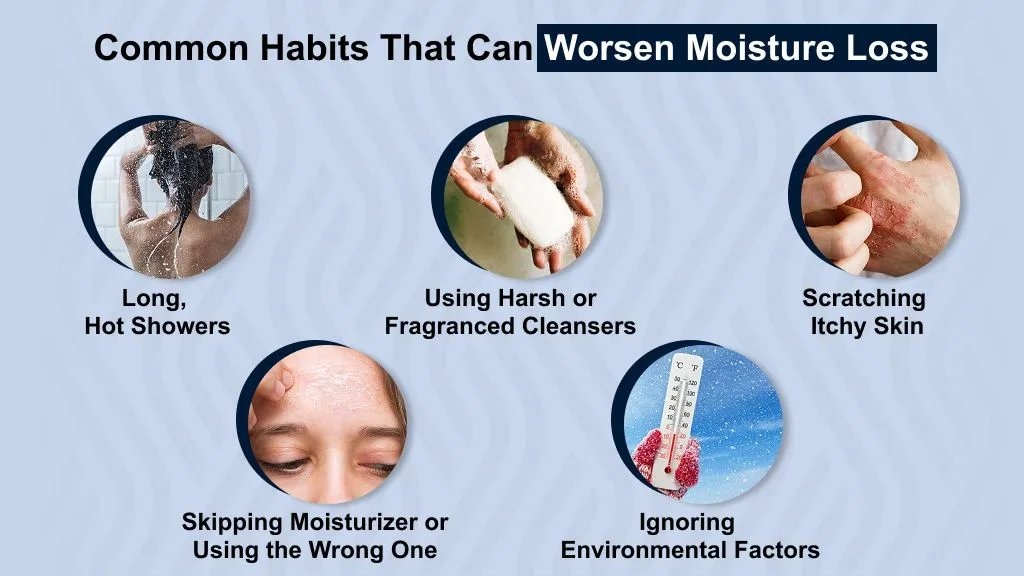
Routine exposures can aggravate atopic skin without causing a true allergy. Frequent washing, friction, heat or an irritating cleanser may worsen dryness and inflammation. This helps explain why avoiding irritation is useful even when no specific allergen has been identified.
Irritant contact dermatitis follows damage from an exposure
Irritant contact dermatitis develops when something directly irritates or damages the skin. Repeated wet work, detergents, cleaning products or friction can contribute. A strong exposure may cause symptoms quickly, while repeated milder exposures may gradually lead to dryness, cracking and burning.
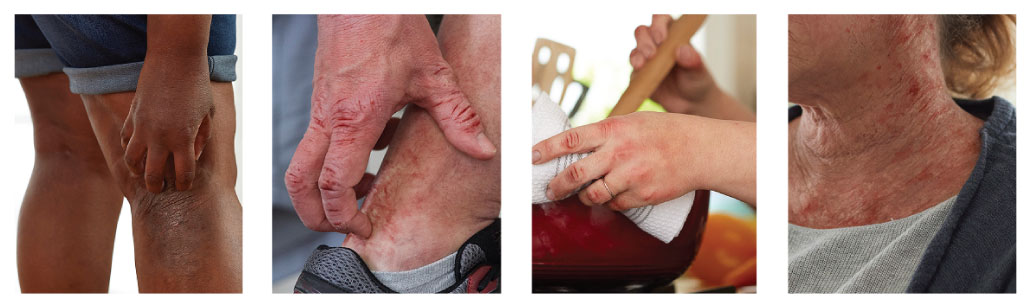
The reaction often affects areas that make contact, such as the hands. It does not require a prior allergic sensitization. Someone with an already vulnerable skin barrier may find that an exposure tolerated by another person causes discomfort.
Allergic contact dermatitis is a delayed immune reaction
Allergic contact dermatitis occurs after a person has become sensitized to a particular substance. Nickel, fragrance and some preservatives are examples, but the relevant allergen differs between people. A product used comfortably in the past can eventually become a problem.
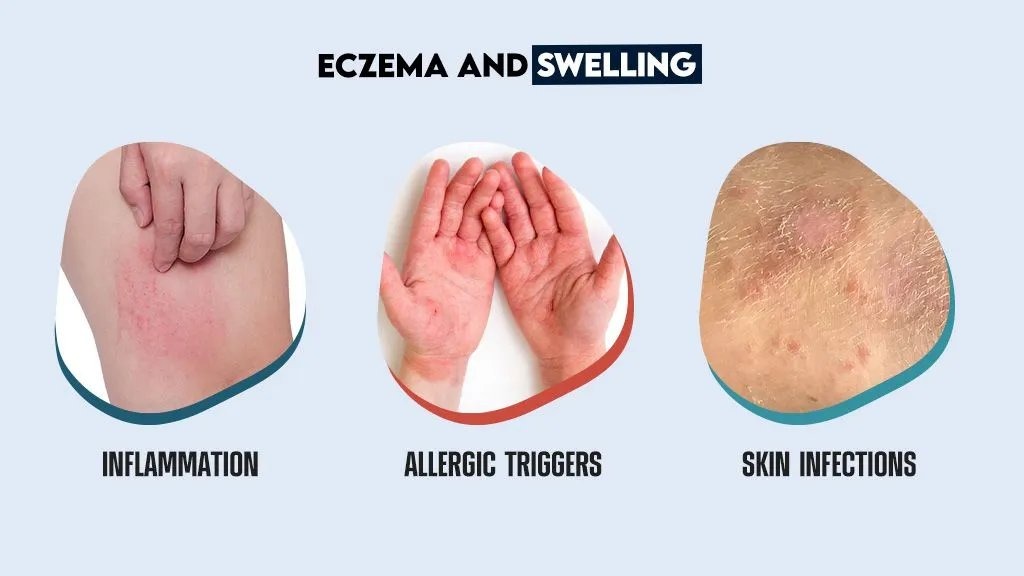
The rash may appear hours to days after exposure and can extend beyond the exact contact area. Itching, swelling, small blisters or weeping may occur. A familiar-looking flare does not tell you which ingredient, if any, is responsible.
The exposure history helps guide assessment
Record where the rash starts, when it appears and what touches that area. Include work materials, gloves, jewelry, adhesives, cosmetics and laundry products. An eyelid rash, for example, may involve something transferred from the hands rather than a product applied directly to the eyelid.
Bring product labels and a list of treatments already tried. A clinician may recommend patch testing when allergic contact dermatitis is suspected. Patch testing investigates delayed contact allergy; it is different from skin-prick testing for immediate allergy and does not diagnose ordinary irritant damage.
Care combines exposure control with skin support
Avoid the confirmed or strongly suspected cause, using protective measures suited to the task. Gloves can help in some situations, but heat, sweat or the glove material itself may also irritate, so the choice needs to fit the exposure.
Gentle washing and a tolerated fragrance-free moisturizer can support dry skin. Dermal Defense Moisturizing Cream contains glycerin and petrolatum for hydration and moisture retention. It cannot neutralize an allergen, make continued exposure safe or replace prescribed anti-inflammatory treatment.
Consult a clinician about persistent or severe symptoms, especially on the face, hands or other sensitive sites. Avoid adding topical antihistamines or multiple medicated products without advice, since these can introduce further irritation or allergy.
Reassess a rash that does not improve
Continued exposure, an incorrect diagnosis or more than one condition may explain persistent symptoms. Increasing pain, warmth, pus or fever requires prompt assessment. Once the diagnosis is established, our daily skin-care guide can help organize the supporting routine.
Reference: American Academy of Dermatology: contact dermatitis.

- Eczema and Swollen Lymph Nodes: Causes and When to Seek Care - March 24, 2026
- Eczema-Prone Skin and Moisture Loss: Understanding the Skin Barrier - March 24, 2026
- Eczema and the Immune System: Inflammation and Barrier Function - February 18, 2026