
Eczema and Mental Health: How It Affects Anxiety & Depression
Doctor Answer: Can Stress Affect Eczema?
Yes. Stress can worsen eczema and trigger flare-ups, but it does not directly cause eczema.
Emotional stress can increase inflammation and disrupt the skin barrier, and intensify itching, making eczema symptoms harder to control–especially in people who are already prone to the condition.
Eczema usually causes symptoms such as dryness, itching, and irritation; however, its impact goes beyond those red rashes. It has a great impact on the person’s mental health as well.
Stress, anxiety, and depression can influence eczema and be influenced by it. This is why understanding the connection between eczema and mental health is essential to managing eczema and improving the overall quality of life.
Can Stress Cause Eczema?
One frequently asked question is “Does stress cause eczema?” The answer to this question is a little complicated. Stress does not directly cause eczema, but in people who are genetically predisposed, it can contribute to flare-ups or worsening symptoms.
Wondering how? Stress can impact the body in different ways. Stress can affect immune signaling and increase inflammation.
Stress-related eczema flare-ups can cause symptoms such as
- Itchy skin
- Dryness
- Redness on the skin
- Oozing and crusting of skin
The term stress eczema is commonly used to describe stress-related eczema flare-ups, although it is not a distinct medical diagnosis. But stress is a common trigger that can worsen existing eczema or provoke flare-ups. Two other common questions related to stress and eczema are that “Can stress cause eczema to flare up? And can stress make eczema worse?” The answer to both of these questions is yes.
Stress is one of the most common factors that trigger flare-ups in adults. And if you are already experiencing a flare-up, then stress can further worsen the itching, irritation, and redness on the skin.
Eczema and Its Impact on Mental Health
Eczema can have a great impact on mental health, especially the intense itching and irritation.
How Eczema Contributes to Anxiety
Anxiety is very common in people experiencing eczema. People with eczema have higher rates of anxiety, although there is no formally recognized diagnosis called “eczema anxiety disorder.” Eczema can contribute to anxiety in different ways.
- Fear of Flare-ups
Many people live in constant fear of the next flare-up, wondering when it will happen, how intense it will be, and when will it resolve. This ongoing uncertainty can create chronic stress and anxiety.
- Social Anxiety
Stress-related eczema flare-ups can be visible on the face, hands, and neck. This can make people feel misunderstood or judged because some people mistakenly assume eczema is contagious.
Additionally, it can have a negative impact on one’s self-confidence, as concerns about appearance may lead to social anxiety.
- Sleep Disruption
Intense itching caused by eczema usually becomes even worse at night, making it hard to fall or stay asleep. The lack of sleep can increase anxiety, irritability, and difficulty coping with stress.
How Eczema Affects Depression
According to research, people with eczema have an approximately 14% higher risk of depression compared with those without eczema. Eczema can contribute to depression in different ways.
- Chronic Discomfort
Living with constant itching, pain, and inflammation can be emotionally exhausting. If the flare-ups continue for a long period, this burden can lead to feelings of hopelessness.
- Isolation
Due to visible eczema rashes, some people start experiencing social anxiety and avoid meeting people. This can create a feeling of isolation, which can lead to depression.
- Lack of Control
When the condition does not improve within the expected duration, or the flare-ups continue to recur, people may start to feel defeated. This sense of lack of control can contribute to low mood and depression.
Effect of Mental Health on Eczema
We know that eczema can cause different mental health issues, but did you know that these issues can also impact eczema? When the body is under stress, it releases certain hormones, such as cortisol, that can weaken the skin barrier and increase inflammation.
This makes the skin more itchy, irritated, and prone to flare-ups. Additionally, anxiety can increase the urge to scratch, which leads to a never-ending itch-scratch cycle and further damages the skin.
These health issues can create a cycle where emotional distress triggers eczema flare-ups and further worsens its symptoms. In order to break this cycle, it is essential to manage stress and work on your mental well-being.
Managing Eczema and Mental Health
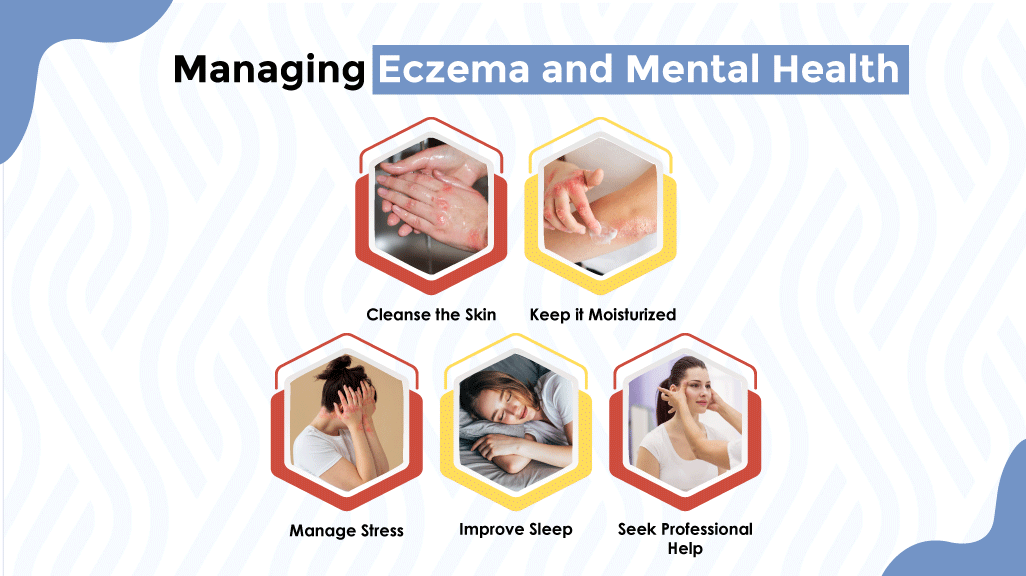
Some effective ways to manage eczema and soothe its symptoms are:
Cleanse the Skin
Use a gentle fragrance-free eczema body wash to cleanse your skin at least once daily. Cleansing the skin properly helps reduce triggers while protecting the skin barrier. However, it is essential to use the right cleanser, as one with harsh chemicals can further irritate the skin.
Use a gentle body wash like the Dermal Defense Eczema Wash to cleanse the skin; it is free from fragrances, parabens, sulfates, phthalates, and is pH-balanced. It is specially formulated for sensitive skin, which is why it is safe to be used daily.
And most of all, it can be used as a body wash, shampoo, and face wash, which helps simplify your eczema skincare routine.
Keep it Moisturized
Dry skin is one of the most common symptoms of eczema, which becomes worse at times due to stress and anxiety. Whether you are experiencing a flare-up or not, it is essential to keep the skin moisturized.
However, make sure the moisturizer you are using is hypoallergenic, fragrance-free, alcohol-free, dye-free, and non-greasy, like the Dermal Defense Eczema Cream. It is infused with ingredients like the licorice root extract, glycerin, and snow white petrolatum that not only moisturize the skin but also soothe it and strengthen its protective barrier.
Manage Stress
If your eczema becomes worse or a flare-up is triggered by stress, then it is important to manage stress to soothe the symptoms. You can manage stress with the help of
- Exercise
- Yoga
- Walking
- Going outdoors
- Spending time with loved ones
- Doing things that you like
Managing stress will not only help improve mental health but also skin health.
Improve Sleep
Eczema-related itching can disrupt sleep, which can worsen anxiety and skin symptoms. Keeping the skin moisturized at night, maintaining a cool sleeping environment, and practicing good sleep hygiene can help improve sleep quality and support emotional well-being.
Seek Professional Help
If eczema is affecting your mental health or daily life, don’t hesitate to seek professional support. A dermatologist can help manage skin symptoms, while a mental health professional can provide you with effective ways to cope with anxiety, depression, or stress.
Conclusion
Eczema and mental health have a two-way relationship. Stress, anxiety, and depression can worsen an eczema flare-up. And a flare-up can cause these mental issues due to its visible symptoms, intense itching, and sleep deprivation.
However, by following a proper eczema skincare routine and managing stress, anxiety, and depression, one can easily manage eczema. If you are searching for eczema-friendly skincare products, then try the Dermal Defense Eczema Skincare Bundle.

- Can Eczema Cause Swollen Lymph Nodes? - March 24, 2026
- Why Eczema-Prone Skin Loses Moisture Easily (And How to Repair the Skin Barrier) - March 24, 2026
- Eczema and the Immune System: Is It Autoimmune or Immune-Mediated? - February 18, 2026
Recent Post
Frequently Asked Questions
Can eczema cause anxiety and depression?
Can stress make eczema worse?
Is eczema linked to mental health in children?
Can managing mental health improve eczema symptoms?
Should people with eczema see a mental health professional?
- Can Eczema Cause Swollen Lymph Nodes? - March 24, 2026
- Why Eczema-Prone Skin Loses Moisture Easily (And How to Repair the Skin Barrier) - March 24, 2026
- Eczema and the Immune System: Is It Autoimmune or Immune-Mediated? - February 18, 2026